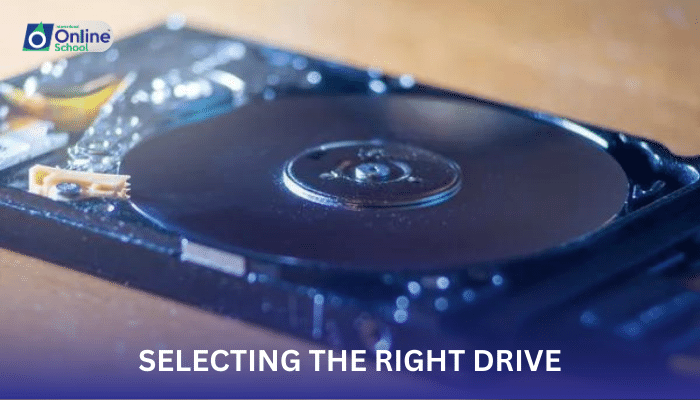
Lesson 07: Selecting the Right Drive: Choosing the Appropriate Drive for Installation

Lesson 22/49 | Study Time: 30 Min
Lesson 07: Selecting the Right Drive: Choosing the Appropriate Drive for Installation

Learning Outcomes


i. Comprehend the significance of choosing an appropriate drive for operating system installation


ii. Identify the different types of drives commonly used for operating system installation


iii. Consider factors such as drive type, storage capacity, and compatibility when selecting a drive


iv. Gain an understanding of the impact of drive performance on overall system performance


v. Make informed decisions when selecting the right drive for installing the operating system


Introduction


The choice of drive for installing the operating system plays a crucial role in the overall performance and stability of the computer. Selecting an appropriate drive ensures a smooth and successful installation process, contributes to faster boot times, and enhances the responsiveness of applications. In this lesson, we delve into the factors to consider when selecting the right drive for operating system installation.


i. Types of Drives for Operating System Installation


Common types of drives used for operating system installation include:


Hard Disk Drive (HDD): A traditional storage device that uses rotating platters to store data. HDDs offer large storage capacities at a relatively affordable cost.


Solid-State Drive (SSD): A newer storage technology that utilizes flash memory to store data. SSDs are significantly faster than HDDs, resulting in faster boot times and application loading.


ii. Factors to Consider


Drive Type: SSDs offer superior performance compared to HDDs, but they come at a higher cost per gigabyte. For budget-conscious users, HDDs provide a cost-effective option.


Storage Capacity: The storage capacity of the drive should be sufficient to accommodate the operating system, applications, and user data. Consider future storage needs to avoid running out of space.


Compatibility: Ensure that the chosen drive is compatible with the computer's motherboard and the operating system being installed.


iii. Impact of Drive Performance


The performance of the drive significantly impacts the overall performance of the computer. A faster drive, such as an SSD, can lead to:


Faster Boot Times: The operating system will load more quickly, reducing the time it takes to start up the computer.


Improved Application Loading: Applications will launch and respond more quickly, enhancing the overall responsiveness of the system.


Smoother Multitasking: Handling multiple tasks simultaneously will be smoother, as the drive can efficiently access and manage data.


iv. Making an Informed Decision


Selecting the right drive for operating system installation involves balancing factors such as performance, storage capacity, and cost. Consider the following guidelines:


Prioritize Performance: If performance is a top priority, an SSD is the best choice, despite its higher cost.


Balance Performance and Cost: For a balance between performance and cost, consider a hybrid drive that combines SSD and HDD technology.


Consider Storage Needs: Choose a drive with sufficient storage capacity to accommodate your current and future needs.


Verify Compatibility: Ensure that the selected drive is compatible with your computer's hardware and operating system.


Choosing the appropriate drive for operating system installation is an essential step in ensuring a seamless and efficient computing experience. By understanding the factors to consider and the impact of drive performance, students can make informed decisions that align with their specific needs and preferences.


Saboor Ali

Saboor Ali

Product Designer

Class Sessions

1- Lesson 01: Introduction to Computers 2- Lesson 02: Understanding Operating Systems 3- Lesson 03: Navigating the Operating System 4- Lesson 04: Essential Operating System Functions 5- Lesson 05: Working with Files and Folders 6- Lesson 06: Installing an Operating System 7- Lesson 01: The Brain of the Computer: The Central Processing Unit (CPU) 8- Lesson 02: Memory: The Storage for Information 9- Lesson 03: The Gates to Interaction: Input/Output Devices 10- Lesson 04: Connecting the Components: AGP, PCI, and IDE 11- Lesson 05: The Sata Revolution: Sata Interface & Cable 12- Lesson 06: Memory Expansion: Memory Slots and Their Usage 13- Lesson 07: Ports for Communication: Serial, Parallel, PS/2, USB, and HDMI Ports 14- Lesson 08: Enhancing Performance: Sound Cards, Video Graphics Cards, Modem Cards, and Network Cards 15- Lesson 09: Storage Revolution: SSD Cards and SSD HDDs 16- Lesson 01: The Essential Software: Defining Operating Systems 17- Lesson 02: Windows and Linux: Exploring Operating System Types 18- Lesson 03: Demystifying Icons: Understanding Basic Operating System Icons 19- Lesson 04: Windows Installation: A Step-by-Step Guide 20- Lesson 05: Mastering Boot Options: Booting from Storage Media 21- Lesson 06: Partitioning and Formatting: Preparing the Hard Drive 22- Lesson 07: Selecting the Right Drive: Choosing the Appropriate Drive for Installation 23- Lesson 08: Device Drivers: Installing Essential Software for Hardware Components 24- Lesson 09: File Management Essentials: Copying, Moving, Renaming, and Searching 25- Lesson 10: Personalizing Your Workspace: Customizing Desktop and Display Settings 26- Lesson 11: Deciphering File Extensions: Understanding File Types 27- Lesson 12: Unveiling Hidden Files: Managing Hidden and System Files 28- Lesson 13: Device Manager: Managing Hardware Devices 29- Lesson 14: Task Manager: Monitoring System Performance 30- Lesson 15: Commanding the System: Utilizing the Command Prompt 31- Lesson 16: Understanding OS Updates and Upgrades: Distinguishing between Routine Updates and Major Upgrades 32- Lesson 17: Keeping the OS Current: The Process of Updating the Operating System 33- Lesson 18: Monitoring Storage Capacity: Checking Free Space on the Hard Drive 34- Lesson 19: Online OS Updates: Checking for Available Updates Online 35- Lesson 20: Booting Options: Booting from Storage Media or Internet 36- Lesson 01: Navigating Applications with Ease: Mastering Menus, Toolbars, and Dialog Boxes 37- Lesson 02: Undo: Restoring Mistakes with a Simple Click 38- Lesson 03: MS Office: A Suite of Essential Productivity Tools 39- Lesson 04: MS Word: The Wordsmith's Toolkit 40- Lesson 05: PowerPoint: Captivating Presentations Made Simple 41- Lesson 06: Excel: Mastering Data with Spreadsheets 42- Lesson 07: Mastering Font Styles and Sizes in MS Word 43- Lesson 08: Formatting Paragraphs for Enhanced Readability 44- Lesson 09: Enhancing Text with Inserting and Editing Tools 45- Lesson 10: Minimizing and Maximizing the Ribbon for a Streamlined Experience 46- Lesson 12: Adjusting Margins for a Tailored Document Layout 47- Lesson 13: Hyperlinking: Connecting Information across Documents and Websites 48- Lesson 14: Embellishing Documents with Watermarks 49- Lesson 15: Managing Documents: Effectively Organizing and Saving Files